Sun, Nov 22, 2026
[Archive]
Volume 11, Issue 4 (11-2026)
J Nutr Food Secur. 2026, 11(4): 624-632 |
Back to browse issues page


Download citation:
BibTeX | RIS | EndNote | Medlars | ProCite | Reference Manager | RefWorks
Send citation to:


BibTeX | RIS | EndNote | Medlars | ProCite | Reference Manager | RefWorks
Send citation to:
Yosaee S, Ashourpour M, Sarvi F, Ranjbar Zahedani M. The Effect of a Balanced Low-Calorie Diet on Depression Score in Overweight and Obese Patients: A Quasi-Experimental Study. , J Nutr Food Secur.. 2026; 11 (4) :624-632
URL: http://jnfs.ssu.ac.ir/article-1-1456-en.html
URL: http://jnfs.ssu.ac.ir/article-1-1456-en.html

Department of Nutrition, School of Health, Larestan University of Medical Sciences, Larestan, Iran
Keywords: Obesity, Depression, Low calorie diet, Beck depression inventory, Nutritional intervention
Full-Text [PDF 969 kb]
(104 Downloads)
| Abstract (HTML) (688 Views)
1 Department of Nutrition, School of Health, Larestan University of Medical Sciences, Larestan, Iran; 2 Department of Public Health, Larestan University of Medical Sciences, Larestan, Iran.
Introduction
Full-Text: (60 Views)
The Effect of a Balanced Low-Calorie Diet on Depression Score in Overweight and Obese Patients: A Quasi-Experimental Study
Somaye Yosaee; PhD 1, Mahkameh Ashourpour; PhD 1, Fatemeh Sarvi; PhD 2&
Maryam Ranjbar Zahedani; PhD *1
Somaye Yosaee; PhD 1, Mahkameh Ashourpour; PhD 1, Fatemeh Sarvi; PhD 2&
Maryam Ranjbar Zahedani; PhD *1
1 Department of Nutrition, School of Health, Larestan University of Medical Sciences, Larestan, Iran; 2 Department of Public Health, Larestan University of Medical Sciences, Larestan, Iran.
| ARTICLE INFO | ABSTRACT | |
| ORIGINAL ARTICLE | Background: Obesity and depression are interrelated public health concerns with significant physical and psychological consequences. This study aimed to evaluate the effect of a balanced low-calorie diet on depression scores in overweight and obese individuals. Methods: In this 12-week quasi-experimental trial, 78 overweight and obese adults (BMI 25–39.9 kg/m²) with Beck Depression Inventory (BDI) scores >13 were enrolled in Larestan, Iran. Participants received a personalized low-calorie diet (500 kcal/day deficit based on Harris-Benedict equation). Moreover, anthropometric measurements and BDI scores were assessed at baseline and after the intervention. Statistical analysis included paired t-tests and multivariate regression, adjusting for age, sex, and baseline depression scores. Results: Sixty-seven participants (15 men, 52 women, mean age 36.4±10.0 years) completed the study. Significant reductions were observed in weight, BMI, waist circumference, and BDI scores (all P<0.001). After adjustment, a one-unit decrease in BMI predicted a 1.19-point reduction in BDI score (P=0.011), and a one-centimeter decrease in waist circumference predicted a 0.18-point reduction (P=0.039). Conclusions: A balanced low-calorie diet significantly reduced both depression scores and anthropometric indices in overweight and obese patients. Thus, dietary intervention may serve as a cost-effective, adjunctive strategy for managing depression levels in this population. |
|
| Article history: Received: 3 Sep 2025 Revised: 28 Jun 2026 Accepted: 28 Jun 2026 |
||
| *Corresponding author: ranjbarmaryam29@yahoo.com Larestan University of Medical Sciences, behind the Larestan Grand Market, Karmand St,North Ghadir Blvd, Shahr_eJadid, Larestan, Fars, Iran. Postal code: 7433193514 Tel: +98 9177018120 |
||
Keywords: Obesity; Depression; Low calorie diet; Beck depression inventory; Nutritional intervention. |
Introduction
Obesity has emerged as a major public health challenge due to its increasing impact on the global burden of disease. In the past decade, the incidence of non-communicable diseases related to obesity has risen sharply, particularly in low- and middle-income countries. According to the Global Burden of Disease Group (GBD Obesity Collaborators, 2017), “the prevalence of obesity has doubled in more than 70 countries since 1980 and has steadily risen in most other countries”. Despite the advances in elucidating the physiological mechanisms that regulate body weight and energy balance, there is a paucity of data on the risk factors that drive the rising rates of obesity. Hence, obesity remains a significant global health problem with diverse vascular, metabolic, and psychosocial consequences (Amin and Mercer, 2016). Body weight regulation is influenced by various interactions among genetic, hormonal, and environmental factors. Moreover, some evidence suggests a potential role of psychological factors in the cognitive etiology of obesity (Agustí et al., 2018, Prickett et al., 2015). Conversely, recent findings and reports indicate the detrimental effect of obesity on brain structure and function (Bischof and Park, 2015, D O'Brien et al., 2017). Obesity is often associated with high prevalence of depression (Pereira-Miranda et al., 2017). Based on the research, there is a significant and bidirectional association between obesity and depression. Accordingly, depressed adolescents have a 70% higher risk of being obese, while obese individuals have a 38% higher risk of developing depression. This finding highlights the importance of addressing both obesity and depression in adolescents and adults (Rajan and Menon, 2017). Depression is one of the most prevalent mental disorders and is characterized by symptoms such as low mood, fatigue, feelings of guilt and worthlessness, thoughts of suicide and death, and sleep and appetite disturbances. In addition, the prevalence of depression has been reported to range from 3.3% to %15.3% (Jantaratnotai et al., 2017). Some studies have found a relationship between BMI and depression. The bidirectional relationship between obesity and depression is mediated by complex biochemical and physiological pathways. From a biochemical perspective, chronic low-grade inflammation is a key driver; adipose tissue in obese individuals secretes pro-inflammatory cytokines, such as tumor necrosis factor-alpha (TNF-α) and interleukin-6 (IL-6), which can cross the blood-brain barrier and trigger neuroinflammation, subsequently altering mood regulation (Raison and Miller, 2013). Furthermore, dysregulation of the hypothalamic-pituitary-adrenal (HPA) axis and alterations in neurotransmitters, particularly serotonin and dopamine, play a critical role in both appetite control and emotional stability. For instance, leptin resistance, common in obesity, not only impairs satiety but is also linked to a decrease in the expression of brain-derived neurotrophic factor (BDNF), which is essential for neuronal plasticity and the prevention of depression (Correia and Vale, 2024). Consequently, weight gain in depressed patients is often attributed to these hormonal imbalances and the compensatory increase in caloric intake due to serotonin deficiency. Conversely, the systemic metabolic dysfunction associated with obesity can exacerbate depressive states, creating a vicious cycle of psychological distress and physical decline (Selman et al., 2025).
Therefore, this situation should be monitored and caloric intake of patients should be adjusted as needed. It seems that implementing an appropriate weight loss diet plan can contribute to the reduction of depression and its complications (Milaneschi et al., 2019, Pereira-Miranda et al., 2017). Most of the studies conducted in Iran have focused on the prevalence of overweight and obesity in depressed individuals (Sharafi et al., 2020) and there are limited studies regarding the emotional problems of overweight and obese individuals and therapeutic interventions to reduce them. Therefore, considering the significance of obesity and overweight, as well as depression and their outcomes, this study has investigated the effect of a balanced weight loss diet on improving the mood of obese individuals who refer to the nutrition and diet therapy clinic.
Materials and Methods
Study design and participants
The quasi-experimental study was conducted on overweight and obese individuals in Larestan, Iran in 2023. The study sample size was determined according to the depression questionnaire score of previous studies as the primary outcome (Dehkordi et al., 2016). Based on a similar study by Faulconbridge (Faulconbridge et al., 2009), the mean depression score was assumed to be 8.1 (SD=5.0) before the intervention and 6.0 (SD=4.2) after the intervention. Considering a correlation of 0.5 and d=1.9, using the sample size formula for a paired t-test, with 90% power and a two sided type I error rate of 0.05, the required sample size was calculated. After accounting for a 10% dropout rate, the final sample size was determined to be 70 participants.
≈4.65
n = Z 1- α 2 + Z 1- β 2 2 d 2 10.5 × 4.65 2 1.9 2
n c n 1-0.1 63 0.9
The inclusion criteria of the study were being overweight and obese (BMI 25-39.9 kg/m2), an age of 20-60 years, a depression score evaluated by Beck questionnaire>13 and willingness to participate in the study (Finer et al., 2014). However, individuals with any severe systemic, endocrine, or metabolic disorders, those taking any type of anti-depressant drugs, individuals who had consumed vitamin-mineral supplements and herbal remedies during the last six months, menopausal women, pregnant and lactating mothers, smokers, and alcohol users were excluded. Overall, 450 participants were screened and 67 eligible ones were found. Then, written informed consent forms for participation in the trial were obtained from all participants. The current study was a 12-week clinical trial with the overall goal of determining the effects of a low-calorie balanced diet on depression score based on Beck's standard questionnaire, anthropometry and body composition in overweight and obese patients. The patients were recruited among the overweight and obese outpatients living in Lar city who referred to health centers with easy non-probability sampling method based on the inclusion criteria. The patients were provided with a balanced weight loss diet based on individual indicators (height, weight, gender and physical activity level). The Total Energy Expenditure (TEE) was calculated using the Harris-Benedict equation, multiplied by the appropriate physical activity level (PAL) coefficient, which was determined based on the participants' self-reported daily activity levels by subtracting 500 kcal/day from their estimated energy requirements for weight loss. The macronutrient composition of the prescribed diet was also designed to provide 55–60% of total daily calories from carbohydrates, 15–20% from proteins, and 25–30% from fats, ensuring a balanced nutritional intake while promoting weight loss.
Moreover, the participants were asked to complete a study questionnaire, which included questions regarding their demographic and socioeconomic characteristics (age, sex, occupation, education level, marital status, and family history of Diabetes Mellitus (DM), Hypertension (HTN), and Cardiovascular Diseases (CVD)). The participants were also asked not to change their physical activity levels and refrain from initiating any new medication or nutritional supplement or avoid changing their food habits during the follow-up period. Patients were followed up weekly by telephone and every two weeks through in-person visits to assess their adherence to the diet, answer their questions and prevent samples from attrition. To evaluate the participants' mood state, the Beck Depression Inventory (BDI) was administered at the beginning and end of the intervention. Moreover, to ensure the accuracy of the responses and provide necessary clarifications, the questionnaires were administered by the primary investigator through a guided interview process with each participant. Weight, height, and waist and hip circumferences (WC; HC) of participants were measured based upon standard protocol at the time they were enrolled in the study (to the nearest 0.1 Kg and 0.5 cm for weight, height, WC and HC respectively). Both WC and HC were measured using a flexible non-elastic tape above the iliac crests and at the maximal buttocks, respectively. Body mass index (BMI), defined as weight (kg) divided by square of height (m2), was then calculated from these measures (Lohman et al., 1988).
Ethical considerations
This trial was registered at http://www.irct.ir/ (Trial Id. IRCT20230316057733N1). The study protocol received ethical approval from the Ethics Committee of Larestan University of Medical Sciences. (Ethical code number: IR.LARUMS.REC.1401.010). Moreover, the participants were informed about the aim and procedures of the study and written informed consent was obtained from each of them in accordance with the guidelines of the medical ethics committee.
Data analysis
Data processing and analysis were conducted using the SPSS statistical software, version 21 for Windows (SPSS Inc, Chicago, USA). Furthermore, all the participants who had completed an initial assessment were included in the final analysis. The results were expressed as mean±Standard Deviation (SD) or frequency and percentages. When the data were normally distributed, independent and paired t-tests were performed to make statistical comparisons between and within groups, respectively. A 2-sided p-value<0.05 was considered to be statistically significant.
Results
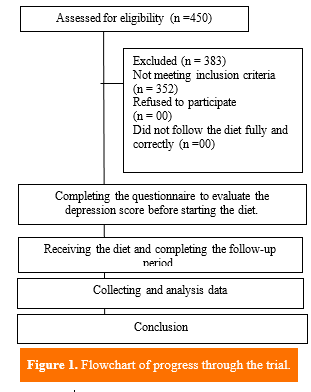
In this study, 450 patients were initially identified. Of these patients, 352 were ineligible, and 31 declined the follow up process/ did not follow the diet fully and correctly. The results were based on data from the remaining 67 patients including 15 men and 52 women (Figure 1). Moreover, the age range of the patients was from 17 to 64 years, with a mean±SD of 36.36±10.02 years.
The characteristics of patients at baseline and after receiving the diet are given in Table 1. Also, Table 1 shows the comparison between the characteristics of the patients before and after receiving the diet. As shown, there is a significant difference before and after the intervention in terms of weight, BMI, WC, and depression score (P<0.001).
In the next step, the changes in BMI and WC before and after the dietary intervention were calculated. The effect of these changes on depression score after intervention is considered with a multiple regression model after adjusting for the effect of age, sex and depression score before intervention.
As shown in Table 2, after adjusting for age, sex, and baseline depression score, each one-unit decrease in BMI was associated with a 1.19-point decrease in the mean post-intervention depression score. This association was statistically significant. (P=0.011). By adjusting the effect of other variables, with decreasing one unit in waist circumference, the mean of depression score after the intervention has decreased as 0.18 (P= 0.039).
Therefore, this situation should be monitored and caloric intake of patients should be adjusted as needed. It seems that implementing an appropriate weight loss diet plan can contribute to the reduction of depression and its complications (Milaneschi et al., 2019, Pereira-Miranda et al., 2017). Most of the studies conducted in Iran have focused on the prevalence of overweight and obesity in depressed individuals (Sharafi et al., 2020) and there are limited studies regarding the emotional problems of overweight and obese individuals and therapeutic interventions to reduce them. Therefore, considering the significance of obesity and overweight, as well as depression and their outcomes, this study has investigated the effect of a balanced weight loss diet on improving the mood of obese individuals who refer to the nutrition and diet therapy clinic.
Materials and Methods
Study design and participants
The quasi-experimental study was conducted on overweight and obese individuals in Larestan, Iran in 2023. The study sample size was determined according to the depression questionnaire score of previous studies as the primary outcome (Dehkordi et al., 2016). Based on a similar study by Faulconbridge (Faulconbridge et al., 2009), the mean depression score was assumed to be 8.1 (SD=5.0) before the intervention and 6.0 (SD=4.2) after the intervention. Considering a correlation of 0.5 and d=1.9, using the sample size formula for a paired t-test, with 90% power and a two sided type I error rate of 0.05, the required sample size was calculated. After accounting for a 10% dropout rate, the final sample size was determined to be 70 participants.
The inclusion criteria of the study were being overweight and obese (BMI 25-39.9 kg/m2), an age of 20-60 years, a depression score evaluated by Beck questionnaire>13 and willingness to participate in the study (Finer et al., 2014). However, individuals with any severe systemic, endocrine, or metabolic disorders, those taking any type of anti-depressant drugs, individuals who had consumed vitamin-mineral supplements and herbal remedies during the last six months, menopausal women, pregnant and lactating mothers, smokers, and alcohol users were excluded. Overall, 450 participants were screened and 67 eligible ones were found. Then, written informed consent forms for participation in the trial were obtained from all participants. The current study was a 12-week clinical trial with the overall goal of determining the effects of a low-calorie balanced diet on depression score based on Beck's standard questionnaire, anthropometry and body composition in overweight and obese patients. The patients were recruited among the overweight and obese outpatients living in Lar city who referred to health centers with easy non-probability sampling method based on the inclusion criteria. The patients were provided with a balanced weight loss diet based on individual indicators (height, weight, gender and physical activity level). The Total Energy Expenditure (TEE) was calculated using the Harris-Benedict equation, multiplied by the appropriate physical activity level (PAL) coefficient, which was determined based on the participants' self-reported daily activity levels by subtracting 500 kcal/day from their estimated energy requirements for weight loss. The macronutrient composition of the prescribed diet was also designed to provide 55–60% of total daily calories from carbohydrates, 15–20% from proteins, and 25–30% from fats, ensuring a balanced nutritional intake while promoting weight loss.
Moreover, the participants were asked to complete a study questionnaire, which included questions regarding their demographic and socioeconomic characteristics (age, sex, occupation, education level, marital status, and family history of Diabetes Mellitus (DM), Hypertension (HTN), and Cardiovascular Diseases (CVD)). The participants were also asked not to change their physical activity levels and refrain from initiating any new medication or nutritional supplement or avoid changing their food habits during the follow-up period. Patients were followed up weekly by telephone and every two weeks through in-person visits to assess their adherence to the diet, answer their questions and prevent samples from attrition. To evaluate the participants' mood state, the Beck Depression Inventory (BDI) was administered at the beginning and end of the intervention. Moreover, to ensure the accuracy of the responses and provide necessary clarifications, the questionnaires were administered by the primary investigator through a guided interview process with each participant. Weight, height, and waist and hip circumferences (WC; HC) of participants were measured based upon standard protocol at the time they were enrolled in the study (to the nearest 0.1 Kg and 0.5 cm for weight, height, WC and HC respectively). Both WC and HC were measured using a flexible non-elastic tape above the iliac crests and at the maximal buttocks, respectively. Body mass index (BMI), defined as weight (kg) divided by square of height (m2), was then calculated from these measures (Lohman et al., 1988).
Ethical considerations
This trial was registered at http://www.irct.ir/ (Trial Id. IRCT20230316057733N1). The study protocol received ethical approval from the Ethics Committee of Larestan University of Medical Sciences. (Ethical code number: IR.LARUMS.REC.1401.010). Moreover, the participants were informed about the aim and procedures of the study and written informed consent was obtained from each of them in accordance with the guidelines of the medical ethics committee.
Data analysis
Data processing and analysis were conducted using the SPSS statistical software, version 21 for Windows (SPSS Inc, Chicago, USA). Furthermore, all the participants who had completed an initial assessment were included in the final analysis. The results were expressed as mean±Standard Deviation (SD) or frequency and percentages. When the data were normally distributed, independent and paired t-tests were performed to make statistical comparisons between and within groups, respectively. A 2-sided p-value<0.05 was considered to be statistically significant.
Results
In this study, 450 patients were initially identified. Of these patients, 352 were ineligible, and 31 declined the follow up process/ did not follow the diet fully and correctly. The results were based on data from the remaining 67 patients including 15 men and 52 women (Figure 1). Moreover, the age range of the patients was from 17 to 64 years, with a mean±SD of 36.36±10.02 years.
The characteristics of patients at baseline and after receiving the diet are given in Table 1. Also, Table 1 shows the comparison between the characteristics of the patients before and after receiving the diet. As shown, there is a significant difference before and after the intervention in terms of weight, BMI, WC, and depression score (P<0.001).
In the next step, the changes in BMI and WC before and after the dietary intervention were calculated. The effect of these changes on depression score after intervention is considered with a multiple regression model after adjusting for the effect of age, sex and depression score before intervention.
As shown in Table 2, after adjusting for age, sex, and baseline depression score, each one-unit decrease in BMI was associated with a 1.19-point decrease in the mean post-intervention depression score. This association was statistically significant. (P=0.011). By adjusting the effect of other variables, with decreasing one unit in waist circumference, the mean of depression score after the intervention has decreased as 0.18 (P= 0.039).
Discussion
The present 12-week quasi-randomized trial examined the effect of a balanced weight loss diet on depression scores and adiposity indices among overweight/obese adult participants. The authors reported significant reductions in weight, BMI, and waist circumference in the study group after the intervention (P<0.001). There was also significant improvement in the self-reported depressive symptom scale assessed by the Beck Depression Inventory (P<0.001). These changes were evident independent of various body composition measures.
According to some studies, weight loss regimens improved depression scores compared to control groups (García-Toro et al., 2012, Jacka et al., 2017). Other studies reported no intervention effect (McMillan et al., 2011). No studies showed that the control group produced better outcomes. Also, previous evidence suggests that the involvement of a dietitian in both the design and implementation of nutritional interventions can enhance their effectiveness (Rocks et al., 2022). In the present study, both the design of the intervention and its face-to-face delivery were conducted under the direct supervision of a dietitian, which may have contributed to the favorable outcomes observed. Barnett et al. reported a high level of participant error during dietary assessment when dietary data were collected using a digital food record method. In contrast, as noted before, in the present study dietary information was obtained through face-to-face interviews conducted by a nutritionist (Barnett et al., 2025).
The present 12-week quasi-randomized trial examined the effect of a balanced weight loss diet on depression scores and adiposity indices among overweight/obese adult participants. The authors reported significant reductions in weight, BMI, and waist circumference in the study group after the intervention (P<0.001). There was also significant improvement in the self-reported depressive symptom scale assessed by the Beck Depression Inventory (P<0.001). These changes were evident independent of various body composition measures.
According to some studies, weight loss regimens improved depression scores compared to control groups (García-Toro et al., 2012, Jacka et al., 2017). Other studies reported no intervention effect (McMillan et al., 2011). No studies showed that the control group produced better outcomes. Also, previous evidence suggests that the involvement of a dietitian in both the design and implementation of nutritional interventions can enhance their effectiveness (Rocks et al., 2022). In the present study, both the design of the intervention and its face-to-face delivery were conducted under the direct supervision of a dietitian, which may have contributed to the favorable outcomes observed. Barnett et al. reported a high level of participant error during dietary assessment when dietary data were collected using a digital food record method. In contrast, as noted before, in the present study dietary information was obtained through face-to-face interviews conducted by a nutritionist (Barnett et al., 2025).
| Table 1. Comparison between the characteristics of the patients before and after the nutritional intervention. | |||||
| P-valueb | After receiving diet | Baseline | Variables | ||
| < 0.001 | 80.28±13.80 | 89.85±14.68a | Weight (kg) | ||
| - | - | - | 160.74±7.73 | Height (cm) | |
| < 0.001 | 31.04±4.78 | 34.70±4.63 | Body mass index (kg/m2) | ||
| < 0.001 | 97.58±12.66 | 110.52±11.06 | Waist circumference (cm) | ||
| < 0.001 | 9.22±7.13 | 18.91±8.93 | Depression score | ||
| a: Mean±SD; b: Paired t-test. | |||||
| Table 2. The results of fitting multiple linear regression to consider the effect of BMI change and waist circumference on depression. | ||||
| P-value | 95% CI | SE | Coefficient | Variable |
| 0.718 | -0.12 : 0.18 | 0.76 | 0.027 | Age (y) |
| 0.425 | -2.18 : 5.01 | 1.82 | 1.46 | Sex |
| 0.011 | -2.09 : -0.27 | 0.45 | -1.19 | Body mass index change (kg/m2) |
| 0.039 | -0.33 : -0.01 | 0.82 | -0.18 | Waist circumference change (cm) |
| 0.002 | 0.24 : 0.58 | 0.084 | 0.41 | Depression score before intervention |
It is believed that face-to-face interactions in the individual setting of the present study were a key element in the success of this study. In contrast, previous studies that reported no significant effects employed other modes of communication. Another factor in the success of the present study was that a dietitian was responsible for the facilitation of nutrition education and counseling, as opposed to studies with no beneficial effect.
Over the past few years, the impact of caloric restriction on the neuroendocrine system and mood is becoming increasingly noticeable (Zhang et al., 2015). Caloric restriction, which is defined as lowering calorie intake without causing malnutrition, has favorable outcomes at both organismic and cellular levels (Hornsby et al., 2016).
Previous studies suggested a direct relation between body fat percentage, especially visceral fat, and the level of depression. Moreover, they showed that depressive symptoms can lead to increased obesity, and a pathophysiological mechanism links depression to increased abdominal fat accumulation (Almeida et al., 2009). Since the experimental group in this study experienced statistical reductions in obesity and body fat index following the intervention, it seems logical that their depression levels would also decrease. In another study that examined the effects of physical activity and diet on depression, the physical activity group had a greater reduction in depression due to a greater reduction in fat (body fat percentage and visceral fat) compared to the diet group, and therefore, a greater improvement in depression levels compared to the other group (US Department of Health Human Services, 2008).
A notable strength of the present study was its relatively adequate follow-up duration of 12 weeks. According to the previous research, nutritional interventions were associated with significant improvements in depressive symptoms (Bayes et al., 2022, Jacka et al., 2017, Parletta et al., 2019). This was while longer intervention durations had also been associated with improvements in depressive symptoms; they did not demonstrate significantly greater benefits compared with interventions of 12 weeks (Bot et al., 2019, Cabrera-Suárez et al., 2024, Okereke et al., 2021).
Furthermore, dietary quality was not assessed before and after the intervention in this study; however, since a balanced low-calorie diet was used, it can be concluded that dietary quality was likely improved compared to before the intervention. One study suggested an association between the severity of depressive symptoms and the diet quality (Paans et al., 2019). Similarly, encouraging individuals to change their eating habits and physical activity may be beneficial in reducing depressive symptoms (Ljungberg et al., 2020). There are many biological pathways through which an improved diet may affect depressive illness. Berk et al. focused on inflammatory (Berk et al., 2013) and oxidative stress (Moylan et al., 2014) pathways as well as brain plasticity (Jacka et al., 2015), and new evidence stressed the gut microbiota (Dash et al., 2015). In general, each of the mentioned pathways was implicated in depression and was also influenced by dietary quality. Some dietary supplements showed promising effects in animal studies, providing insight into the therapeutic target of future antidepressant research (Fan et al., 2017, Oliveira et al., 2017).
The findings of the present study also had implications for patient treatment. Since antidepressant treatment often has side effects such as weight gain, diabetes, and cardiovascular problems (Himmerich et al., 2015), the preliminary results of this study suggest that weight loss treatment for patients with both obesity and depression using a balanced LCD may be considered. On the other hand, body weight is affected by most antidepressants, with most leading to weight gain and weight loss which were caused by only a few including fluoxetine and bupropion, through the use of BDNF signaling (Marosi et al., 2016). Due to the negative side effects of current antidepressants at effective doses, it would be likely to reduce side effects with reducing the effective dose. The findings suggest that diet may be used to enhance the effectiveness of antidepressants in humans while minimizing the side effects of currently used antidepressants. Therefore, calorie restriction may have the potential to reduce both body weight and hyperglycemia, not just because of a reduction in food intake, but also because of the biochemical effects of increased BDNF levels. Moreover, energy restriction therapy is less costly and easier to administer than other treatments for patients who have become drug-resistant (Fond et al., 2013). On the other hand, certain individuals such as the elderly population (Volkert et al., 2022) or those who are at risk of or experiencing an eating disorder (Goldschmidt et al., 2012), may be contraindicated for certain dietary restrictions. Hence, future studies should focus more on weight loss and maintenance strategies, especially in the vulnerable groups, and the results of these studies should be taken into consideration by healthcare providers when choosing the best strategy.
Since the present study was conducted in clinical settings, it was not possible to assign a control group to this study. Thus, the researchers suggest randomized controlled studies including elderly populations from different racial/ethnic groups. Comparisons of diet quality before and after the intervention and the effect of increased physical activity on outcomes are also warranted.
Moreover, the present study did not assess baseline caloric and macronutrient intake of the participants. Therefore, the authors were unable to tailor the low‑calorie diet to individual baseline dietary patterns. Future studies are recommended to include comprehensive baseline dietary assessments prior to implementing nutritional interventions
Conclusions
This 12-week quasi-experimental trial demonstrated that a balanced low-calorie diet not only improved anthropometric indices such as weight, BMI, and waist circumference, but also significantly reduced depressive symptoms in overweight and obese adults. These findings highlight the potential of dietary interventions as a cost-effective, accessible and non-pharmacological strategy for managing both obesity and depression. While the absence of a control group and limited generalizability are notable limitations, the results support the integration of structured nutritional counseling into routine care for patients struggling with obesity and mood disorders. Future randomized controlled trials with diverse populations, longer follow-up and consideration of diet quality and physical activity are warranted to confirm these results and further elucidate the biological mechanisms linking weight reduction and mental health.
Acknowledgments
The authors would like to thank all individuals who contributed to this study and supported its completion. We also gratefully acknowledge the assistance and cooperation of the participants.
Authors' contributions
Yosaee S contributed to study design and data collection. Sarvi F assisted with data collection. Ranjbar Zahedani M and Ashourpour M revised the manuscript critically, and approved the final version. All authors read and approved the final manuscript.
Conflict of interest
The authors declared no conflict of interest.
Funding
This study was funded by Larestan University of Medical Sciences.
References
Agustí A, et al. 2018. Interplay between the gut-brain axis, obesity and cognitive function. Frontiers in neuroscience. 12: 329519.
Almeida OP, Calver J, Jamrozik K, Hankey GJ & Flicker L 2009. Obesity and metabolic syndrome increase the risk of incident depression in older men: the health in men study. American journal of geriatric psychiatry. 17 (10): 889-898.
Amin T & Mercer JG 2016. Hunger and satiety mechanisms and their potential exploitation in the regulation of food intake. Current obesity reports. 5 (1): 106-112.
Barnett A, et al. 2025. Use of digital food records in clinical settings: lessons in translation from a randomised controlled trial. Journal of human nutrition and dietetics. 38 (1): e13389.
Bayes J, Schloss J & Sibbritt D 2022. The effect of a Mediterranean diet on the symptoms of depression in young males (the “AMMEND: A Mediterranean Diet in MEN with Depression” study): A randomized controlled trial. American journal of clinical nutrition. 116 (2): 572-580.
Berk M, et al. 2013. So depression is an inflammatory disease, but where does the inflammation come from? BMC medicine. 11 (1): 200.
Bischof GN & Park DC 2015. Obesity and aging: consequences for cognition, brain structure, and brain function. Psychosomatic medicine. 77 (6): 697-709.
Bot M, et al. 2019. Effect of multinutrient supplementation and food-related behavioral activation therapy on prevention of major depressive disorder among overweight or obese adults with subsyndromal depressive symptoms: the MooDFOOD randomized clinical trial. Jama. 321 (9): 858-868.
Cabrera-Suárez BM, et al. 2024. Mediterranean diet-based intervention to improve depressive symptoms: analysis of the PREDIDEP randomized trial. Nutritional neuroscience. 27 (9): 951-961.
Correia AS & Vale N 2024. Advancements exploring major depressive disorder: insights on oxidative stress, serotonin metabolism, BDNF, HPA axis dysfunction, and pharmacotherapy advances. International journal of translational medicine. 4 (1): 176-196.
D O'Brien P, Hinder LM, Callaghan BC & Feldman EL 2017. Neurological consequences of obesity. Lancet neurology. 16 (6): 465-477.
Dash S, Clarke G, Berk M & Jacka FN 2015. The gut microbiome and diet in psychiatry: focus on depression. Current opinion in psychiatry. 28 (1): 1-6.
Dehkordi EH, Sedehi M, Shahraki ZG & Najafi R 2016. Effect of folic acid on homocysteine and insulin resistance of overweight and obese children and adolescents. Advanced biomedical research. 5 (1): 88.
Fan J, Li BJ, Wang XF, Zhong LL & Cui RJ 2017. Ghrelin produces antidepressant-like effect in the estrogen deficient mice. Oncotarget. 8 (35): 58964.
Faulconbridge LF, et al. 2009. Changes in symptoms of depression with weight loss: results of a randomized trial. Obesity. 17 (5): 1009-1016.
Finer S, Saravanan P, Hitman G & Yajnik C 2014. The role of the one‐carbon cycle in the developmental origins of Type 2 diabetes and obesity. Diabetic medicine. 31 (3): 263-272.
Fond G, Macgregor A, Leboyer M & Michalsen A 2013. Fasting in mood disorders: neurobiology and effectiveness. A review of the literature. Psychiatry research. 209 (3): 253-258.
García-Toro M, et al. 2012. Four hygienic-dietary recommendations as add-on treatment in depression: a randomized-controlled trial. Journal of affective disorders. 140 (2): 200-203.
GBD Obesity Collaborators 2017. Health effects of overweight and obesity in 195 countries over 25 years. New England journal of medicine. 377 (1): 13-27.
Goldschmidt AB, Wall M, Loth KA, Le Grange D & Neumark-Sztainer D 2012. Which dieters are at risk for the onset of binge eating? A prospective study of adolescents and young adults. Journal of adolescent health. 51 (1): 86-92.
Himmerich H, Minkwitz J & C Kirkby K 2015. Weight gain and metabolic changes during treatment with antipsychotics and antidepressants. Endocrine, metabolic & immune disorders-drug targets (formerly current drug targets-immune, endocrine & metabolic disorders). 15 (4): 252-260.
Hornsby AK, et al. 2016. Short-term calorie restriction enhances adult hippocampal neurogenesis and remote fear memory in a Ghsr-dependent manner. Psychoneuroendocrinology. 63: 198-207.
Jacka FN, Cherbuin N, Anstey KJ, Sachdev P & Butterworth P 2015. Western diet is associated with a smaller hippocampus: a longitudinal investigation. BMC medicine. 13 (1): 215.
Jacka FN, et al. 2017. A randomised controlled trial of dietary improvement for adults with major depression (the ‘SMILES’trial). BMC medicine. 15 (1): 23.
Jantaratnotai N, Mosikanon K, Lee Y & McIntyre RS 2017. The interface of depression and obesity. Obesity research & clinical practice. 11 (1): 1-10.
Ljungberg T, Bondza E & Lethin C 2020. Evidence of the importance of dietary habits regarding depressive symptoms and depression. International journal of environmental research and public health. 17 (5): 1616.
Lohman TG, Roche AF & Martorell R 1988. Anthropometric standardization reference manual.
Marosi K, et al. 2016. 3‐Hydroxybutyrate regulates energy metabolism and induces BDNF expression in cerebral cortical neurons. Journal of neurochemistry. 139 (5): 769-781.
McMillan L, Owen L, Kras M & Scholey A 2011. Behavioural effects of a 10-day Mediterranean diet. Results from a pilot study evaluating mood and cognitive performance. Appetite. 56 (1): 143-147.
Milaneschi Y, Simmons WK, van Rossum EF & Penninx BW 2019. Depression and obesity: evidence of shared biological mechanisms. Molecular psychiatry. 24 (1): 18-33.
Moylan S, et al. 2014. Oxidative & nitrosative stress in depression: why so much stress? Neuroscience & biobehavioral reviews. 45: 46-62.
Okereke OI, et al. 2021. Effect of long-term supplementation with marine omega-3 fatty acids vs placebo on risk of depression or clinically relevant depressive symptoms and on change in mood scores: a randomized clinical trial. JAMA. 326 (23): 2385-2394.
Oliveira PS, et al. 2017. Vaccinium virgatum fruit extract as an important adjuvant in biochemical and behavioral alterations observed in animal model of metabolic syndrome. Biomedicine & pharmacotherapy. 88: 939-947.
Paans NP, et al. 2019. Depression and eating styles are independently associated with dietary intake. Appetite. 134: 103-110.
Parletta N, et al. 2019. A Mediterranean-style dietary intervention supplemented with fish oil improves diet quality and mental health in people with depression: A randomized controlled trial (HELFIMED). Nutritional neuroscience. 22 (7): 474-487.
Pereira-Miranda E, Costa PR, Queiroz VA, Pereira-Santos M & Santana ML 2017. Overweight and obesity associated with higher depression prevalence in adults: a systematic review and meta-analysis. Journal of the American College of Nutrition. 36 (3): 223-233.
Prickett C, Brennan L & Stolwyk R 2015. Examining the relationship between obesity and cognitive function: a systematic literature review. Obesity research & clinical practice. 9 (2): 93-113.
Raison C & Miller A 2013. Role of inflammation in depression: implications for phenomenology, pathophysiology and treatment. Inflammation in psychiatry. 28: 33-48.
Rajan TM & Menon V 2017. Psychiatric disorders and obesity: a review of association studies. Journal of postgraduate medicine. 63 (3): 182-190.
Rocks T, et al. 2022. Effectiveness of nutrition and dietary interventions for people with serious mental illness: systematic review and meta‐analysis. Medical Journal of Australia. 217: S7-S21.
Selman A, Dai J, Driskill J, Reddy AP & Reddy PH 2025. Depression and obesity: Focus on factors and mechanistic links. Biochimica et Biophysica Acta (BBA)-Molecular Basis of Disease. 1871 (1): 167561.
Sharafi SE, et al. 2020. Prevalence of anxiety and depression in patients with overweight and obesity. Obesity medicine. 17: 100169.
US Department of Health Human Services 2008. Physical activity fundamental to preventing disease. 2002, Office of the Assistant Secretary for Planning and Evaluation. pp. 1-19.
Volkert D, et al. 2022. ESPEN practical guideline: Clinical nutrition and hydration in geriatrics. Clinical nutrition. 41 (4): 958-989.
Zhang Y, et al. 2015. The effects of calorie restriction in depression and potential mechanisms. Current neuropharmacology. 13 (4): 536-542.
Over the past few years, the impact of caloric restriction on the neuroendocrine system and mood is becoming increasingly noticeable (Zhang et al., 2015). Caloric restriction, which is defined as lowering calorie intake without causing malnutrition, has favorable outcomes at both organismic and cellular levels (Hornsby et al., 2016).
Previous studies suggested a direct relation between body fat percentage, especially visceral fat, and the level of depression. Moreover, they showed that depressive symptoms can lead to increased obesity, and a pathophysiological mechanism links depression to increased abdominal fat accumulation (Almeida et al., 2009). Since the experimental group in this study experienced statistical reductions in obesity and body fat index following the intervention, it seems logical that their depression levels would also decrease. In another study that examined the effects of physical activity and diet on depression, the physical activity group had a greater reduction in depression due to a greater reduction in fat (body fat percentage and visceral fat) compared to the diet group, and therefore, a greater improvement in depression levels compared to the other group (US Department of Health Human Services, 2008).
A notable strength of the present study was its relatively adequate follow-up duration of 12 weeks. According to the previous research, nutritional interventions were associated with significant improvements in depressive symptoms (Bayes et al., 2022, Jacka et al., 2017, Parletta et al., 2019). This was while longer intervention durations had also been associated with improvements in depressive symptoms; they did not demonstrate significantly greater benefits compared with interventions of 12 weeks (Bot et al., 2019, Cabrera-Suárez et al., 2024, Okereke et al., 2021).
Furthermore, dietary quality was not assessed before and after the intervention in this study; however, since a balanced low-calorie diet was used, it can be concluded that dietary quality was likely improved compared to before the intervention. One study suggested an association between the severity of depressive symptoms and the diet quality (Paans et al., 2019). Similarly, encouraging individuals to change their eating habits and physical activity may be beneficial in reducing depressive symptoms (Ljungberg et al., 2020). There are many biological pathways through which an improved diet may affect depressive illness. Berk et al. focused on inflammatory (Berk et al., 2013) and oxidative stress (Moylan et al., 2014) pathways as well as brain plasticity (Jacka et al., 2015), and new evidence stressed the gut microbiota (Dash et al., 2015). In general, each of the mentioned pathways was implicated in depression and was also influenced by dietary quality. Some dietary supplements showed promising effects in animal studies, providing insight into the therapeutic target of future antidepressant research (Fan et al., 2017, Oliveira et al., 2017).
The findings of the present study also had implications for patient treatment. Since antidepressant treatment often has side effects such as weight gain, diabetes, and cardiovascular problems (Himmerich et al., 2015), the preliminary results of this study suggest that weight loss treatment for patients with both obesity and depression using a balanced LCD may be considered. On the other hand, body weight is affected by most antidepressants, with most leading to weight gain and weight loss which were caused by only a few including fluoxetine and bupropion, through the use of BDNF signaling (Marosi et al., 2016). Due to the negative side effects of current antidepressants at effective doses, it would be likely to reduce side effects with reducing the effective dose. The findings suggest that diet may be used to enhance the effectiveness of antidepressants in humans while minimizing the side effects of currently used antidepressants. Therefore, calorie restriction may have the potential to reduce both body weight and hyperglycemia, not just because of a reduction in food intake, but also because of the biochemical effects of increased BDNF levels. Moreover, energy restriction therapy is less costly and easier to administer than other treatments for patients who have become drug-resistant (Fond et al., 2013). On the other hand, certain individuals such as the elderly population (Volkert et al., 2022) or those who are at risk of or experiencing an eating disorder (Goldschmidt et al., 2012), may be contraindicated for certain dietary restrictions. Hence, future studies should focus more on weight loss and maintenance strategies, especially in the vulnerable groups, and the results of these studies should be taken into consideration by healthcare providers when choosing the best strategy.
Since the present study was conducted in clinical settings, it was not possible to assign a control group to this study. Thus, the researchers suggest randomized controlled studies including elderly populations from different racial/ethnic groups. Comparisons of diet quality before and after the intervention and the effect of increased physical activity on outcomes are also warranted.
Moreover, the present study did not assess baseline caloric and macronutrient intake of the participants. Therefore, the authors were unable to tailor the low‑calorie diet to individual baseline dietary patterns. Future studies are recommended to include comprehensive baseline dietary assessments prior to implementing nutritional interventions
Conclusions
This 12-week quasi-experimental trial demonstrated that a balanced low-calorie diet not only improved anthropometric indices such as weight, BMI, and waist circumference, but also significantly reduced depressive symptoms in overweight and obese adults. These findings highlight the potential of dietary interventions as a cost-effective, accessible and non-pharmacological strategy for managing both obesity and depression. While the absence of a control group and limited generalizability are notable limitations, the results support the integration of structured nutritional counseling into routine care for patients struggling with obesity and mood disorders. Future randomized controlled trials with diverse populations, longer follow-up and consideration of diet quality and physical activity are warranted to confirm these results and further elucidate the biological mechanisms linking weight reduction and mental health.
Acknowledgments
The authors would like to thank all individuals who contributed to this study and supported its completion. We also gratefully acknowledge the assistance and cooperation of the participants.
Authors' contributions
Yosaee S contributed to study design and data collection. Sarvi F assisted with data collection. Ranjbar Zahedani M and Ashourpour M revised the manuscript critically, and approved the final version. All authors read and approved the final manuscript.
Conflict of interest
The authors declared no conflict of interest.
Funding
This study was funded by Larestan University of Medical Sciences.
References
Agustí A, et al. 2018. Interplay between the gut-brain axis, obesity and cognitive function. Frontiers in neuroscience. 12: 329519.
Almeida OP, Calver J, Jamrozik K, Hankey GJ & Flicker L 2009. Obesity and metabolic syndrome increase the risk of incident depression in older men: the health in men study. American journal of geriatric psychiatry. 17 (10): 889-898.
Amin T & Mercer JG 2016. Hunger and satiety mechanisms and their potential exploitation in the regulation of food intake. Current obesity reports. 5 (1): 106-112.
Barnett A, et al. 2025. Use of digital food records in clinical settings: lessons in translation from a randomised controlled trial. Journal of human nutrition and dietetics. 38 (1): e13389.
Bayes J, Schloss J & Sibbritt D 2022. The effect of a Mediterranean diet on the symptoms of depression in young males (the “AMMEND: A Mediterranean Diet in MEN with Depression” study): A randomized controlled trial. American journal of clinical nutrition. 116 (2): 572-580.
Berk M, et al. 2013. So depression is an inflammatory disease, but where does the inflammation come from? BMC medicine. 11 (1): 200.
Bischof GN & Park DC 2015. Obesity and aging: consequences for cognition, brain structure, and brain function. Psychosomatic medicine. 77 (6): 697-709.
Bot M, et al. 2019. Effect of multinutrient supplementation and food-related behavioral activation therapy on prevention of major depressive disorder among overweight or obese adults with subsyndromal depressive symptoms: the MooDFOOD randomized clinical trial. Jama. 321 (9): 858-868.
Cabrera-Suárez BM, et al. 2024. Mediterranean diet-based intervention to improve depressive symptoms: analysis of the PREDIDEP randomized trial. Nutritional neuroscience. 27 (9): 951-961.
Correia AS & Vale N 2024. Advancements exploring major depressive disorder: insights on oxidative stress, serotonin metabolism, BDNF, HPA axis dysfunction, and pharmacotherapy advances. International journal of translational medicine. 4 (1): 176-196.
D O'Brien P, Hinder LM, Callaghan BC & Feldman EL 2017. Neurological consequences of obesity. Lancet neurology. 16 (6): 465-477.
Dash S, Clarke G, Berk M & Jacka FN 2015. The gut microbiome and diet in psychiatry: focus on depression. Current opinion in psychiatry. 28 (1): 1-6.
Dehkordi EH, Sedehi M, Shahraki ZG & Najafi R 2016. Effect of folic acid on homocysteine and insulin resistance of overweight and obese children and adolescents. Advanced biomedical research. 5 (1): 88.
Fan J, Li BJ, Wang XF, Zhong LL & Cui RJ 2017. Ghrelin produces antidepressant-like effect in the estrogen deficient mice. Oncotarget. 8 (35): 58964.
Faulconbridge LF, et al. 2009. Changes in symptoms of depression with weight loss: results of a randomized trial. Obesity. 17 (5): 1009-1016.
Finer S, Saravanan P, Hitman G & Yajnik C 2014. The role of the one‐carbon cycle in the developmental origins of Type 2 diabetes and obesity. Diabetic medicine. 31 (3): 263-272.
Fond G, Macgregor A, Leboyer M & Michalsen A 2013. Fasting in mood disorders: neurobiology and effectiveness. A review of the literature. Psychiatry research. 209 (3): 253-258.
García-Toro M, et al. 2012. Four hygienic-dietary recommendations as add-on treatment in depression: a randomized-controlled trial. Journal of affective disorders. 140 (2): 200-203.
GBD Obesity Collaborators 2017. Health effects of overweight and obesity in 195 countries over 25 years. New England journal of medicine. 377 (1): 13-27.
Goldschmidt AB, Wall M, Loth KA, Le Grange D & Neumark-Sztainer D 2012. Which dieters are at risk for the onset of binge eating? A prospective study of adolescents and young adults. Journal of adolescent health. 51 (1): 86-92.
Himmerich H, Minkwitz J & C Kirkby K 2015. Weight gain and metabolic changes during treatment with antipsychotics and antidepressants. Endocrine, metabolic & immune disorders-drug targets (formerly current drug targets-immune, endocrine & metabolic disorders). 15 (4): 252-260.
Hornsby AK, et al. 2016. Short-term calorie restriction enhances adult hippocampal neurogenesis and remote fear memory in a Ghsr-dependent manner. Psychoneuroendocrinology. 63: 198-207.
Jacka FN, Cherbuin N, Anstey KJ, Sachdev P & Butterworth P 2015. Western diet is associated with a smaller hippocampus: a longitudinal investigation. BMC medicine. 13 (1): 215.
Jacka FN, et al. 2017. A randomised controlled trial of dietary improvement for adults with major depression (the ‘SMILES’trial). BMC medicine. 15 (1): 23.
Jantaratnotai N, Mosikanon K, Lee Y & McIntyre RS 2017. The interface of depression and obesity. Obesity research & clinical practice. 11 (1): 1-10.
Ljungberg T, Bondza E & Lethin C 2020. Evidence of the importance of dietary habits regarding depressive symptoms and depression. International journal of environmental research and public health. 17 (5): 1616.
Lohman TG, Roche AF & Martorell R 1988. Anthropometric standardization reference manual.
Marosi K, et al. 2016. 3‐Hydroxybutyrate regulates energy metabolism and induces BDNF expression in cerebral cortical neurons. Journal of neurochemistry. 139 (5): 769-781.
McMillan L, Owen L, Kras M & Scholey A 2011. Behavioural effects of a 10-day Mediterranean diet. Results from a pilot study evaluating mood and cognitive performance. Appetite. 56 (1): 143-147.
Milaneschi Y, Simmons WK, van Rossum EF & Penninx BW 2019. Depression and obesity: evidence of shared biological mechanisms. Molecular psychiatry. 24 (1): 18-33.
Moylan S, et al. 2014. Oxidative & nitrosative stress in depression: why so much stress? Neuroscience & biobehavioral reviews. 45: 46-62.
Okereke OI, et al. 2021. Effect of long-term supplementation with marine omega-3 fatty acids vs placebo on risk of depression or clinically relevant depressive symptoms and on change in mood scores: a randomized clinical trial. JAMA. 326 (23): 2385-2394.
Oliveira PS, et al. 2017. Vaccinium virgatum fruit extract as an important adjuvant in biochemical and behavioral alterations observed in animal model of metabolic syndrome. Biomedicine & pharmacotherapy. 88: 939-947.
Paans NP, et al. 2019. Depression and eating styles are independently associated with dietary intake. Appetite. 134: 103-110.
Parletta N, et al. 2019. A Mediterranean-style dietary intervention supplemented with fish oil improves diet quality and mental health in people with depression: A randomized controlled trial (HELFIMED). Nutritional neuroscience. 22 (7): 474-487.
Pereira-Miranda E, Costa PR, Queiroz VA, Pereira-Santos M & Santana ML 2017. Overweight and obesity associated with higher depression prevalence in adults: a systematic review and meta-analysis. Journal of the American College of Nutrition. 36 (3): 223-233.
Prickett C, Brennan L & Stolwyk R 2015. Examining the relationship between obesity and cognitive function: a systematic literature review. Obesity research & clinical practice. 9 (2): 93-113.
Raison C & Miller A 2013. Role of inflammation in depression: implications for phenomenology, pathophysiology and treatment. Inflammation in psychiatry. 28: 33-48.
Rajan TM & Menon V 2017. Psychiatric disorders and obesity: a review of association studies. Journal of postgraduate medicine. 63 (3): 182-190.
Rocks T, et al. 2022. Effectiveness of nutrition and dietary interventions for people with serious mental illness: systematic review and meta‐analysis. Medical Journal of Australia. 217: S7-S21.
Selman A, Dai J, Driskill J, Reddy AP & Reddy PH 2025. Depression and obesity: Focus on factors and mechanistic links. Biochimica et Biophysica Acta (BBA)-Molecular Basis of Disease. 1871 (1): 167561.
Sharafi SE, et al. 2020. Prevalence of anxiety and depression in patients with overweight and obesity. Obesity medicine. 17: 100169.
US Department of Health Human Services 2008. Physical activity fundamental to preventing disease. 2002, Office of the Assistant Secretary for Planning and Evaluation. pp. 1-19.
Volkert D, et al. 2022. ESPEN practical guideline: Clinical nutrition and hydration in geriatrics. Clinical nutrition. 41 (4): 958-989.
Zhang Y, et al. 2015. The effects of calorie restriction in depression and potential mechanisms. Current neuropharmacology. 13 (4): 536-542.
Type of article: orginal article |
Subject:
public specific
Send email to the article author
| Rights and permissions | |
 |
This work is licensed under a Creative Commons Attribution-NonCommercial 4.0 International License. |
